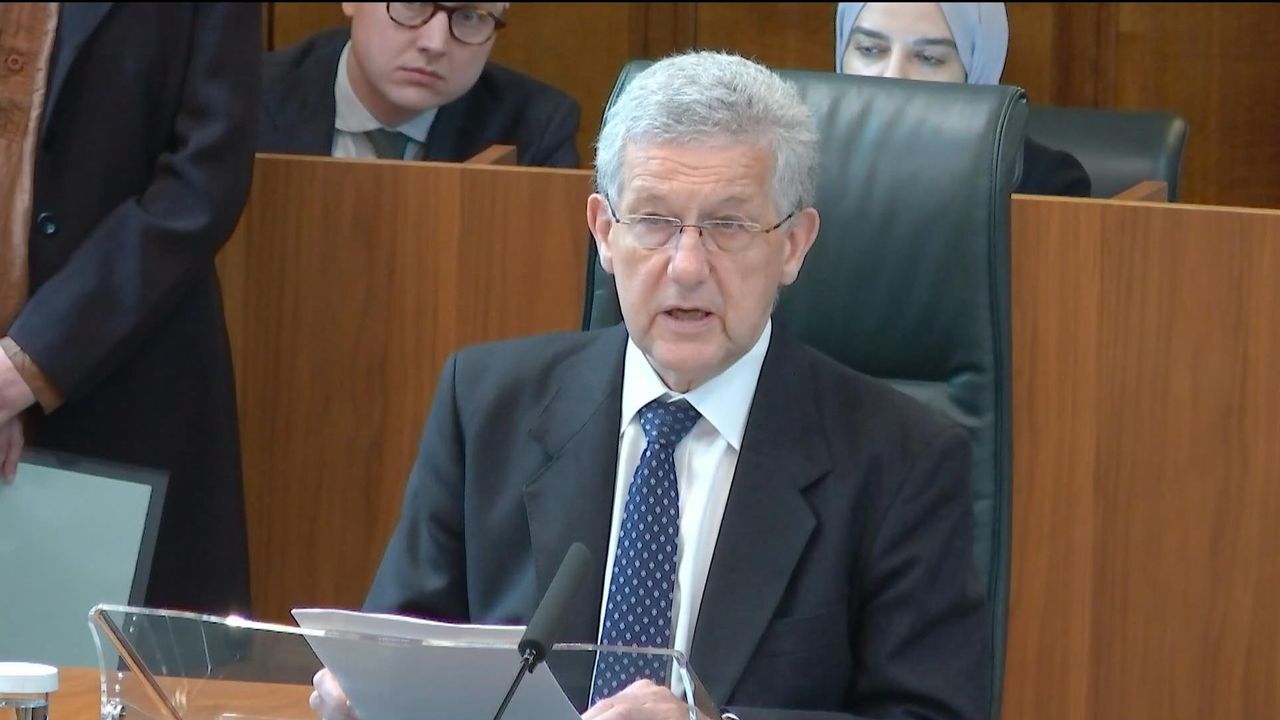

The UK Supreme Court has made a landmark ruling, clearly stating that in the Equality Act, the words “woman” and “sex” only refer to biological women and biological sex.
In a decision welcomed by gender-critical campaigners, all five judges agreed that under the Equality Act 2010, the legal definition of a woman does not include transgender women, even if they have a Gender Recognition Certificate (GRC).
This ruling could have major consequences, possibly limiting transgender women’s access to women-only spaces and services. It has also sparked renewed calls to update the UK’s gender recognition laws.
The UK government responded by saying the decision brings “clarity and confidence” for women and for people managing places like hospitals, sports clubs, and women’s shelters.
A spokesperson said: “We have always supported the protection of single-sex spaces based on biological sex. Single-sex spaces are protected in law and will always be protected by this government.”
The case was taken to the UK Supreme Court by the gender-critical group For Women Scotland, which is financially supported by JK Rowling. This came after two Scottish courts had previously dismissed the group’s argument that the Equality Act defines “woman” as only those born biologically female.
Lord Hodge, the court’s deputy president, stated that the Equality Act clearly refers to biological sex assigned at birth, not a person’s acquired gender — even if they have a Gender Recognition Certificate (GRC).
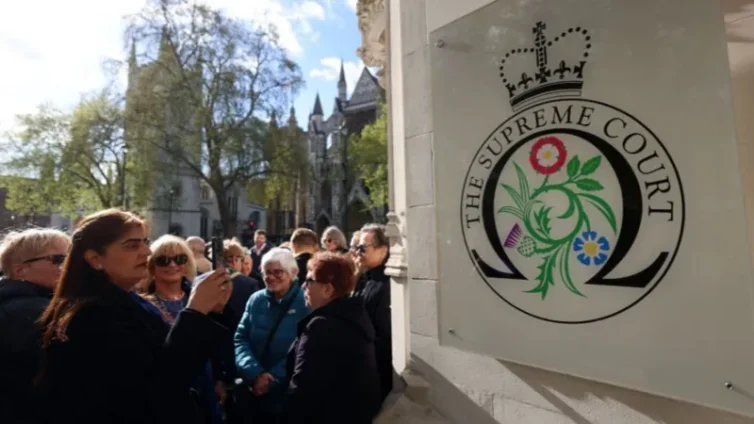
He explained that this interpretation would impact policymaking in areas like sports, the military, hospitals, women-only charities, and access to changing rooms and female-only spaces. However, he noted that trans women still retain certain protections — such as equal pay rights — and may still be recognised as women in some specific situations.
In its 88-page judgment, the court said that while the word “biological” did not appear in the definition of man or woman in the Equality Act, “the ordinary meaning of those plain and unambiguous words corresponds with the biological characteristics that make an individual a man or a woman”.
If “sex” did not only mean biological sex in the 2010 legislation, providers of single-sex spaces including changing rooms, homeless hostels and medical services would face “practical difficulties”, it said.
The justices added: “Read fairly and in context, the provisions relating to single-sex services can only be interpreted by reference to biological sex.”
The ruling represents a significant defeat for the Scottish government. For Women Scotland had initially challenged legislation that allowed trans women with a GRC to sit on public boards in posts reserved for women.
Scotland’s first minister, John Swinney, said his government accepted the court’s judgment. He said it clarified the limits of the Gender Recognition Act 2004, which introduced gender recognition certificates for trans people.
“We will now engage on the implications of the ruling,” he said. “Protecting the rights of all will underpin our actions.”
The Scottish government defended its position in the case, stating that its actions were based on advice from the Equality and Human Rights Commission (EHRC). Following the ruling, it said it would now consult with UK ministers and the EHRC to assess the wider impact of the decision, since the legislation in question was originally passed by Westminster.
Trans rights groups urged the community and allies to remain calm in response to the ruling.
Scottish Trans, a leading advocacy group, expressed disappointment, saying: “We are really shocked by today’s Supreme Court ruling. It overturns two decades of understanding about how the law treats trans men and women who have Gender Recognition Certificates. We’ll continue to push for a world where trans people can live with privacy, dignity, and safety — rights that everyone deserves.”
Sacha Deshmukh, chief executive of Amnesty International UK — which had supported the Scottish government in the case — also called the decision “clearly disappointing.”
He added, “There may be worrying consequences for trans people, but it’s important to note that the court confirmed trans people are still protected under the Equality Act from discrimination and harassment. The ruling does not remove protections based on the characteristic of ‘gender reassignment’ or other safeguards under the Equality Act.”
On the other side, Susan Smith, co-founder of For Women Scotland, said the legal fight had been “a really, really long road.” She welcomed the judgment, saying: “The judges confirmed what we always believed — that women are protected based on their biological sex. Sex is real, and women can now feel assured that spaces and services meant for them are truly for them. We’re deeply grateful to the Supreme Court.”
Author JK Rowling also shared her thoughts online, praising the group behind the case: “It took three extraordinary, tenacious Scottish women with an army behind them to get this case to the Supreme Court. I’m so proud to know you.”
Lord Hodge, deputy president of the court, said the stance taken by the Scottish government and the EHRC — that only those with Gender Recognition Certificates count as women — effectively created “two sub-groups.” This, he explained, could cause confusion for organisations, since it’s often impossible to know who has a certificate due to privacy laws.
He also pointed out that allowing trans women full legal recognition as women could affect spaces and services created specifically for lesbians, a group that has also faced historical discrimination and marginalisation.
Kishwer Falkner, chair of the EHRC, said the commission welcomed the clarity the ruling brought to the debate over single-sex and lesbian-only spaces, but acknowledged that more time would be needed to fully understand the decision’s broader consequences.
“We are pleased that this judgment addresses several of the difficulties we highlighted in our submission to the court, including the challenges faced by those seeking to maintain single-sex spaces, and the rights of same-sex attracted persons to form associations.”
Follow Parallel Facts on WhatsApp Channel: https://whatsapp.com/channel/0029VaCQSAoHgZWiDjR3Kn2E