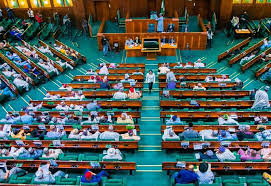

A controversial bill aimed at forcing Nigerians to vote in every election has moved closer to becoming law after scaling its second reading in the House of Representatives.
The proposal, spearheaded by Speaker of the House Tajudeen Abbas, received sweeping support during Thursday’s heated plenary session, pushing it forward to the next legislative stage.
Nigeria, often hailed as Africa’s largest democracy, continues to grapple with alarmingly low voter turnout. Despite recording over 93 million registered voters ahead of the 2023 general elections, only 27% bothered to show up on election day. This apathy has fueled growing concerns about the credibility of those elected to power and whether they truly represent the will of the people.
The proposed legislation seeks to enforce voting as a civic obligation. If passed, eligible Nigerians would be legally compelled to participate in elections, a move the drafters say will revive public interest in governance and reinforce accountability in leadership.
Supporters of the bill often point to countries like Australia, Belgium, and Brazil, where mandatory voting laws have been in place for years and have kept participation rates consistently high, often above 90%.
Defending the bill on the floor, Abbas declared, “This legislation will deepen Nigeria’s democratic process by compelling citizens to participate in choosing their leaders.” He also hinted that it would come bundled with provisions for voter education, simplified polling procedures, and clear mechanisms for enforcement.
READ MORE: “We Must Remove This Inefficient Government,” Says Atiku, Confirms Opposition Coalition Talks
But not all lawmakers were sold. Dissenting voices raised valid concerns, especially about enforcement in areas plagued by insecurity or logistical challenges. Critics questioned how such a policy would be implemented fairly and whether punishing citizens for not voting crosses the line into authoritarianism.
Still, the bill passed through a voice vote without visible opposition and has now been referred to the appropriate committee for further scrutiny.
Analysts say the move could be an attempt by the ruling class to mask deeper governance failures with legislative theatrics. Making voting mandatory, they argue, does little to fix the reasons people stay away from polls in the first place, disillusionment, distrust, and the absence of real political alternatives.
As the bill proceeds through the National Assembly, many Nigerians are asking whether this will improve democracy or simply criminalize disengagement.
Follow the Parallel Facts channel on WhatsApp: https://whatsapp.com/channel/0029VaCQSAoHgZWiDjR3Kn2E