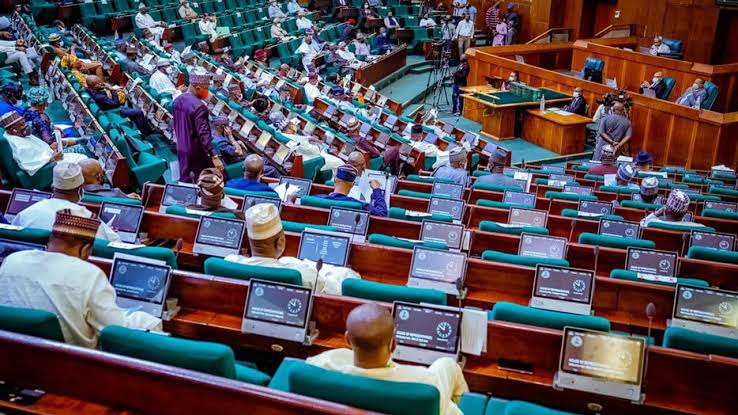

The National Assembly has proposed that the 2027 presidential and governorship elections be held in November 2026, diverging from the usual February or March timeframe of the election year.
The recommendation is part of the draft amendments to the Electoral Act 2022, discussed on Monday during a public hearing by the Joint Committee on Electoral Matters, chaired by Senator Simon Lalong (APC, Plateau South).

Under Section 4(7) of the proposed amendment, elections for the offices of President and Governor would be conducted not later than 185 days before the expiration of the current officeholder’s tenure.
With the current administration scheduled to end on May 29, 2027, this places the next presidential and governorship elections in November 2026.
Similarly, Section 4(5) proposes that federal and state legislative elections be held 185 days before the dissolution of the respective Houses.
Lawmakers explained that the adjustment aims to ensure all election disputes are resolved before winners are sworn in, preventing situations where court cases linger after the start of a new tenure.
The Chairman of the House Committee on Electoral Matters, Hon. Adebayo Balogun, said the proposed timelines would reduce the current 180 days allowed for tribunal rulings to 90 days, with appellate and Supreme Court decisions limited to 60 days each, all within the 185-day window before inauguration.
The proposal also calls for corresponding amendments to Sections 285 and 139 of the 1999 Constitution (as amended) to align with the new electoral calendar.
At the public hearing, several stakeholders, including the Independent National Electoral Commission (INEC) represented by Prof. Abdullahi Zuru, advocated for electronic voting and electronic transmission of results to boost transparency.
Under Section 60(5) of the draft amendment, presiding officers would be required to transmit results both electronically and manually, with noncompliance punishable by one-year imprisonment, a ₦1 million fine, or both.
The draft also introduces early voting, allowing groups such as security personnel, INEC staff, accredited journalists, observers, and ad-hoc officials to cast their ballots up to 14 days before election day.
Additionally, the joint committee recommends removing election timelines from the Constitution and incorporating them into the Electoral Act, enabling greater flexibility for future adjustments.
Stakeholders at the hearing largely welcomed the proposed reforms, describing them as steps toward enhancing electoral credibility, improving institutional efficiency, and ensuring that post-election litigations no longer overlap with new tenures.
Story Credit: Vanguard Newspaper
Follow the Parallel Facts channel on WhatsApp: https://whatsapp.com/channel/0029VaCQSAoHgZWiDjR3Kn2E